
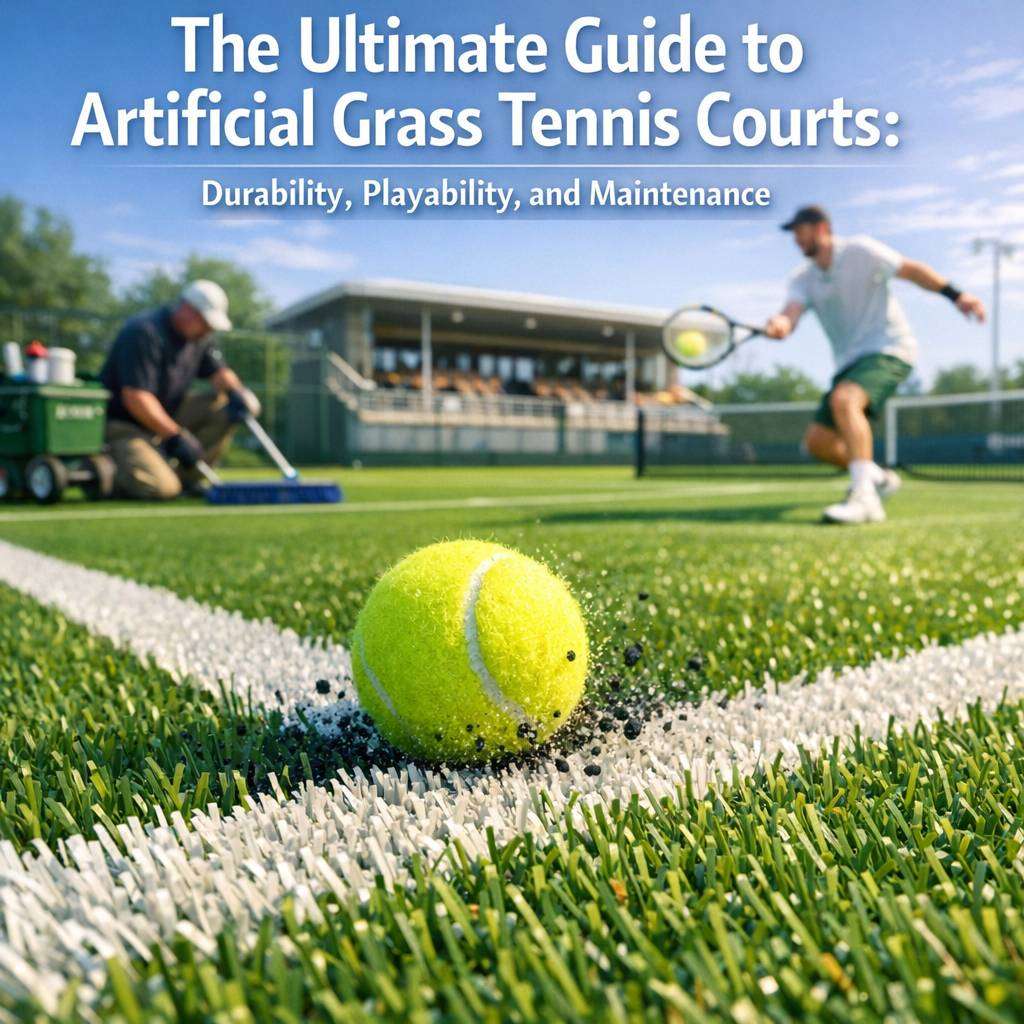
As an expert in surface technology and sports facilities, I have observed a steady shift towards artificial grass tennis courts for clubs, schools, and private facilities. When chosen and maintained correctly, artificial grass tennis offers consistent playing characteristics, excellent durability, and relatively straightforward upkeep compared with traditional hard or clay surfaces. This guide covers the core considerations for durability, playability, and maintenance, with practical guidance on installation, cleaning, and resurfacing.
Understanding the basics: what makes artificial grass tennis courts tick
Artificial grass tennis courts are composed of synthetic fibres, typically polyethylene or polypropylene, with a backing system and drainage underlay. A specialised infill—often a combination of silica sand and synthetic fibres—helps stabilise the surface, improve ball bounce, and provide realistic footing. Modern systems are designed to mimic the feel and performance of natural grass while offering predictable play across a wide range of weather conditions.
Key attributes to evaluate when selecting artificial grass tennis:
- Pile height and fibre shape: Shorter piles yield faster play; longer piles offer a plusher feel and better ball dwell time.
- Fibre rigidity and tuft anchoring: Durable construction resists rutting and wear from repeated play.
- Infilling system: Usually a blend of sand and granules to balance cushioning with stability.
- Drainage capability: Essential for year-round use and rapid drying after rain.
FAQ: Artificial Grass Tennis
What is artificial grass tennis?
Artificial grass tennis refers to tennis court surfaces made from synthetic turf fibers designed to resemble natural grass. These surfaces provide a consistent bounce, lower maintenance, and weather-resistant play compared to traditional grass courts.
How does artificial grass tennis differ from hard courts and clay?
- Hard courts: Typically made from asphalt or concrete with a textured surface; very consistent bounce but can be harder on the body.
- Clay: Slower surface with higher friction, producing a slower ball bounce and more slide for players.
- Artificial grass tennis: A middle ground with a springy, cushioned feel, moderate speed, and good durability; maintenance is easier than clay and often less bouncy than hard courts.
What are the main types of artificial grass tennis surfaces?
- Nylon or polyethylene fibers: Durable, good ball bounce, suitable for high-use facilities.
- Polypropylene blends: More economical, but may wear faster under heavy use.
- Nylon-coated or monofilament fibers: Enhanced resilience and longer life.
- Pile height options: Short piles for faster play; longer piles for slower play and better ball traction.
Is an artificial grass tennis court suitable for all climates?
Yes, artificial grass tennis courts are generally suitable for a wide range of climates. They drain quickly, resist waterlogging, and dry faster than natural grass. However, extreme heat can soften some surfaces, and proper maintenance is needed to preserve bounce and traction.
What maintenance does an artificial grass tennis court require?
- Regular brushing to keep fibers upright and maintain even bounce.
- Clearing debris and leaves to prevent mold and drainage issues.
- Periodic infill checks and replacement if using sand or rubber infill.
- Cleaning with water or mild cleaners as recommended by the manufacturer.
- Routine inspections for seams, drainage, and wear.
How long does an artificial grass tennis court last?
With proper installation and maintenance, artificial grass tennis courts typically last 8–15 years, depending on usage, backing material, fiber quality, and maintenance frequency.
How much does it cost to install an artificial grass tennis court?
Costs vary by size, surface quality, backing, infill type, and site conditions. Installed prices commonly range from roughly $40,000 to $120,000+ for a full court, including surface, drainage, and nets. Custom features (lighting, fencing, leveling) can increase the total.
How fast are artificial grass tennis courts?
Speed varies by pile height and fiber type. Shorter pile heights and denser fibers generally yield faster play, while longer pile heights create a slower, more forgiving ball bounce. Proper infill and maintenance also influence speed.
Can I install artificial grass tennis at home?
Yes. Many homeowners install smaller practice courts or recreational mini-courts. DIY installation is possible but requires careful surface leveling, drainage planning, and knowledge of infill and fiber installation. Professional installation is recommended for best performance and longevity.
Are artificial grass tennis courts suitable for competitive play?
High-quality artificial grass tennis courts designed for competition can meet ITF-standard groundstrokes and ball bounce characteristics. Ensure you choose a professional-grade surface with appropriate fibers, backing, and maintenance regime for tournament play.
What should I look for when selecting an artificial grass tennis surface?
- Fiber material and pile height matched to desired speed.
- Backing quality and drainage efficiency.
- Infill type and distribution to ensure even bounce and comfort.
- UV resistance and warranty.
- Drainage capabilities and maintenance requirements.
- Installation credentials and surface certifications (ITF, ITA compatibility if applicable).
Is maintenance different for indoor vs outdoor artificial grass tennis courts?
Indoors, you avoid weather-related debris and rain, but you still need to manage dust, indoor UV exposure, and infill retention. Outdoors requires more frequent cleaning after rain, leaf removal, and checks for drainage and mold due to moisture exposure.
If you’d like, I can tailor these FAQs to your target audience (e.g., homeowners, clubs, or installers) or adjust tone and length.
Durability: building a court that stands the test of time
Durability depends on material quality, construction methods, and ongoing maintenance. When evaluating tennis court installation options, consider:
- Substructure: A well-designed concrete or asphalt base with a transparent, permeable sub-base layer reduces movement and improves longevity.
- Fibre and backing quality: Higher-grade fibres resist UV degradation and abrasion. A robust backing prevents fibre pull-out and edge fraying.
- Infill durability: Infill should be chosen for longevity and safety. A balanced sand-infilling technology reduces dust and maintains sizing consistency.
- Weather resilience: Modern artificial grass courts are engineered to tolerate freeze-thaw cycles and heavy rain without compromising structure or play.
To maximise durability:
- Ensure professional installation by accredited contractors with selected systems meeting industry standards.
- Specify a surface with appropriate drainage, especially in regions with heavy rainfall.
- Protect the court from excessive weed growth and root intrusion around edges by using a solid perimeter membrane.
Playability: achieving consistent bounce and feel
Playability is the single most important attribute for tennis court users. The right artificial grass tennis surface should provide:
- Consistent ball bounce across the court and over time.
- Good surface stability and even footing to reduce the risk of slips.
- A pleasing, natural-feel speed that suits your playing level and preferences.
Factors influencing playability:
- Pile height and fibre geometry: Shorter piles tend to play faster; longer piles provide more cushion and a slower pace.
- Infill balance: The correct ratio of sand to granules ensures optimal ball response and shock absorption.
- Surface rigidity: A well-bonded, uniform surface minimises fraying and irregularities.
- Drainage and surface temperature: Efficient drainage prevents pooling and overheating, preserving a true bounce even in hot weather.
Practical tips for playability:
- Commission an on-site ball bounce test by a qualified technician after installation and after major weather events.
- Schedule regular checks to identify uneven wear or compression zones, especially in high-traffic areas.
- If you notice a notable drop in playability, consider minor resurfacing or re-infilling rather than a full replacement.
Maintenance: keeping your artificial grass tennis court in peak condition
Proper tennis court maintenance extends the life of your surface and preserves consistent play. Core maintenance tasks include cleaning, infill management, brushing, and periodic resurfacing.
Tennis court cleaning
- Regular debris removal: Clear leaves, twigs, and organic matter to prevent staining and drainage blockage.
- Algae and mould control: In damp climates, treat surfaces with a gym-safe, surfactant-based cleaner suitable for synthetic fibres. Rinse thoroughly to avoid residue.
- Spill management: Promptly address spillages to prevent staining, using a mild detergent and water solution.
Artificial grass tennis courts offer year-round play with consistent bounce and low maintenance. Players appreciate slip-resistant surfaces and rapid drainage for rain games. For expert court cleaning, visit this resource: https://www.castlewindowsct.com/tennis-court-cleaning/ to keep surfaces pristine.
Artificial grass tennis offers durable, low-maintenance play surfaces ideal for homes and clubs. It stays clean, dries quickly, and preserves bounce. For professional cleaning solutions, visit: https://www.rosspropertyservices.com/services/tennis-court-cleaning/ to keep surfaces pristine.
Tennis court brushing
- Brushing redistributes infill and maintains fibre uprightness. Use a professional machine with soft brushes designed for artificial grass.
- Frequency: Brush the surface monthly during peak use and after heavy rain or wind events to maintain even fibre orientation.
Tennis grass court maintenance and infill management
- Infill monitoring: Over time, infill may migrate or compact. Replenish as needed to sustain the desired bounce and cushioning.
- Edge and seam inspection: Inspect for uplifted edges or seam gaps following wind exposure or heavy use. Prompt repair prevents larger issues.
Artificial grass tennis offers a low-maintenance, all-season playing surface that stays lush and consistent. Players enjoy true ball bounce, steadier footing, and reduced debris compared to natural grass. Ideal for city homes, clubs, or schools, it provides a cost-effective alternative with year-round usability. From installation to ongoing care, proper upkeep ensures durability and performance. For more information on upkeep and installation, visit the following resource: https://www.artificialgrassmaintenance.co.uk.
Tennis court resurfacing and renovation
- Resurfacing frequency varies by usage, climate, and initial quality but is typically required every 7–15 years for commercial facilities and longer for well-managed residential projects.
- Signs you may need resurfacing:
- Persistent wear patterns or pooling despite cleaning and infill adjustments
- Visible fibre fraying, edge lift, or seam damage
- Subsurface drainage issues or persistent inconsistent bounce
- Resurfacing options: Depending on the project, you may refresh the surface with a top layer or completely replace the artificial grass with a new system. A full assessment by a qualified installer will determine the most cost-effective approach.
- Persistent wear patterns or pooling despite cleaning and infill adjustments
- Visible fibre fraying, edge lift, or seam damage
- Subsurface drainage issues or persistent inconsistent bounce
Tennis court installation: choosing the right partner and process
Tennis court installation is a specialist field. A quality installation should include:
- Sub-base preparation: Compacted, level, and well-drained groundwork.
- Correct system selection: Choose a lawn with the appropriate pile height and fibre construction for expected play speed.
- Specialist infill application: Controlled brushing and distribution to achieve uniform density.
- Comprehensive testing: Post-installation testing for bounce, drainage, and surface safety.
Practical considerations:
- Site-specific conditions such as shade, wind exposure, and drainage influence the design.
- Local climate dictates material choices, particularly in areas with high UV exposure or heavy rainfall.
- Warranty terms and maintenance guidance from the installer are essential for long-term performance.
Practical guidance: planning, budgeting, and long-term care
- Plan for lifecycle costs: Initial installation, routine maintenance, and periodic resurfacing should be weighed against alternative surfaces.
- Budget for maintenance: Allocate funds for regular cleaning, brushing, infill replacement, and occasional resurfacing.
- Engage with specialists: Work with manufacturers and installers who provide comprehensive aftercare, cleaning guidance, and repair services.
- Indoor vs outdoor: Indoor courts may experience different wear patterns and temperature effects; select a system designed for indoor use if applicable.
This guide aims to empower facility managers, club committees, and property owners to make informed decisions about artificial grass tennis courts. By prioritising high-quality installation, proactive maintenance, and timely resurfacing, you can ensure durability, consistent playability, and a long, enjoyable lifespan for your tennis court artificial grass investment.
If you’d like, I can tailor recommendations to your climate, usage patterns, and budget, or provide a checklist for your upcoming tennis court installation project.