
If your tennis court is showing cracks, fading lines, or rough play surfaces, tennis court resurfacing is the smart, cost-effective solution. A professional job restores bounce, grip, and aesthetics, extending the life of your court. For reliable service and quality materials, visit https://fourseasonstenniscourts.co.uk/. Quick turnaround, minimal downtime, and tailored resurfacing options help you regain playing confidence and draw in more players to your facility.
Tennis court resurfacing is essential for performance and safety, restoring bounce and grip for every shot. Regular maintenance protects investment and extends surface life. For expert guidance on cleaning and prep, visit https://www.newenglandsealcoating.com/cleaning-your-tennis-court/ and plan next steps.
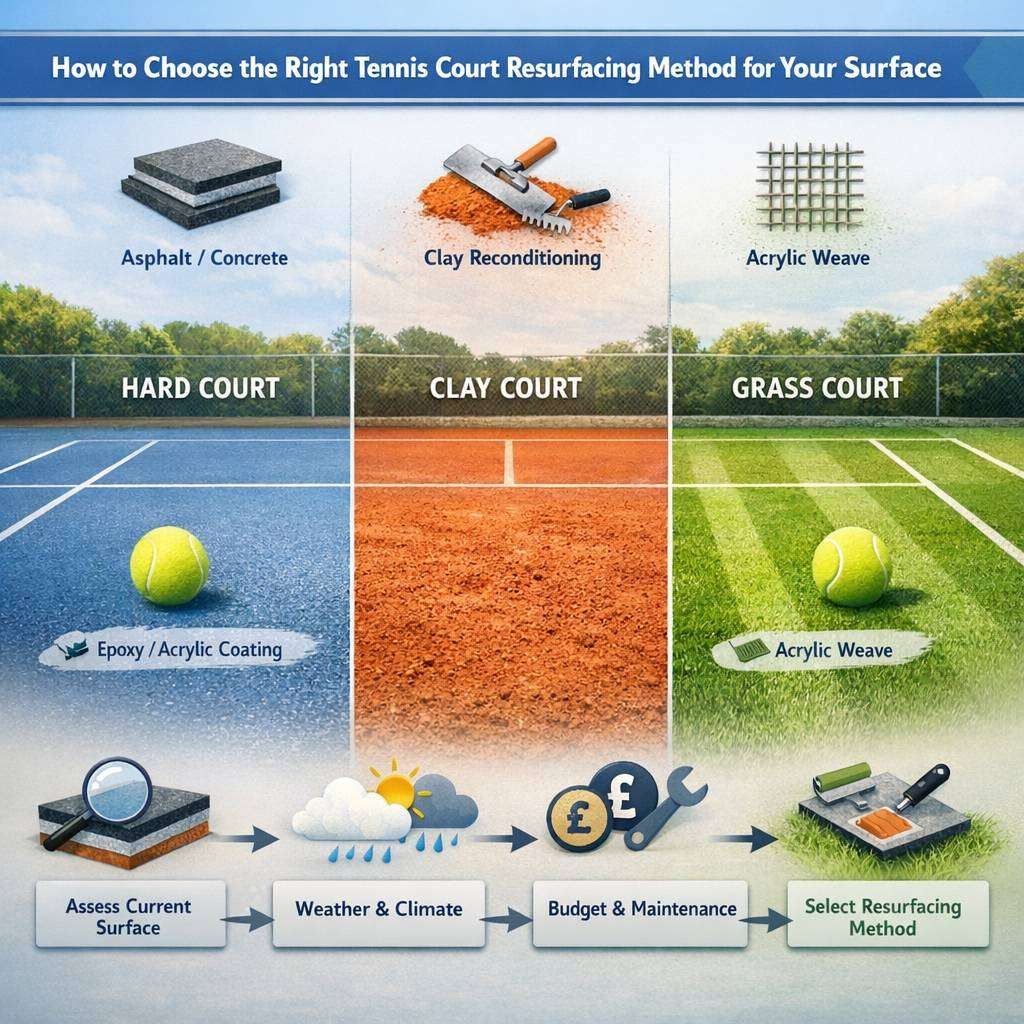
Tennis court owners and clubs frequently face the question of how to select the most suitable resurfacing method for their surface. The right approach combines understanding the current condition of the court, the type of surface, anticipated usage, maintenance capabilities, and long-term cost implications. In this guide, we explore practical criteria and expert considerations to help you navigate tennis court maintenance decisions, ensuring optimal playability and durability.
Assessing the current surface and project goals
Before selecting a resurfacing method, conduct a thorough assessment of the existing surface and the goals for the project. Key factors to evaluate include:
- Surface condition: Look for widespread cracking, loose material, drainage issues, and unsafe play areas. Minor surface defects may be addressed with targeted repairs, while extensive damage may necessitate a full resurface.
- Play characteristics: Consider ball bounce consistency, traction, and surface firmness. Different resurfacing methods yield varying levels of playability; for example, asphalt or concrete courts differ from synthetic options in how they respond to foot traffic and weather.
- Usage and location: A court in a high-use facility or one exposed to harsh weather may require more durable materials and more frequent maintenance cycles.
- Compliance and regulations: If you operate in a governing body’s jurisdiction, ensure any chosen method complies with safety standards and league rules.
- Budget and lifecycle: Estimate total cost of resurfacing, including preparation, installation, and ongoing tennis court maintenance. Also, consider the expected lifespan of the surface and planned maintenance windows.
With a clear diagnostic, you can determine whether to pursue tennis court resurfacing as a full rebuild or a more targeted tennis court repairs approach. This decision will guide the selection of materials and installation techniques that align with your objectives.
Material options and performance traits
The choice of material is central to the resurfacing decision. Common options include:
- Acrylic over asphalt or concrete: The most widely used system for outdoor courts, offering a controllable bounce, good durability, and a wide colour choice. This method is well-suited for basketball or tennis facilities that demand consistent performance and straightforward maintenance. It is compatible with various overlay thicknesses to tune playability and speed.
- Artificial grass tennis (synthetic turf) systems: An excellent option for players seeking a grass-court feel. Artificial grass tennis courts provide a distinctive bounce and a softer surface, which can reduce stress on joints. They require careful selection of pile height, fibre type, and infill to achieve the desired playing characteristics. Artificial grass tennis courts also demand robust drainage and regular tennis court maintenance to keep the tufted fibres uniform.
- Fibre or cushioned overlays: For players prioritising comfort and joint protection, cushioned or shock-absorbent overlays can be applied atop existing bases. These layers improve impact absorption but may alter pace and ball response.
- Porous macadam or resin-bound surfacing: These options can offer stylish aesthetics and good drainage. They’re typically used in multi-sport environments or projects emphasising drainage performance as part of tennis court installation.
When evaluating materials, balance performance with longevity, maintenance needs, and the overall running costs. For example, artificial grass tennis courts can deliver an appealing aesthetic and a unique playing experience, but they may require more frequent brushing and infill maintenance compared with traditional acrylic surfaces. Consider how the surface will withstand environmental exposure, the anticipated frequency of resurfacing intervals, and compatibility with existing drainage systems.
Tennis court resurfacing rejuvenates playability, safety, and aesthetics, restoring traction and bounce for competitive matches and casual sessions. Professional resurfacing extends court life, reduces maintenance, and boosts property value. Learn more about options by visiting https://tenniscourtservices.com/.
Maintenance planning and life-cycle considerations
A successful resurfacing project extends beyond the installation day. A practical maintenance plan supports sustained performance and reduces the need for frequent tennis court repairs. Consider these elements:
- Regular inspections: Schedule periodic checks for cracks, drainage efficiency, and surface wear. Early detection helps prevent more extensive damage and keeps playing quality high.
- Cleaning and debris management: Clear surfaces of leaves, dirt, and debris to maintain traction and consistent ball bounce. For artificial grass tennis courts, routine brushing and infill top-ups are essential to preserve fibre performance.
- Recoating cadence: Acrylic surfaces often require reapplication of a colour coat and protective sealant at defined intervals to maintain UV resistance and surface integrity.
- Repairing damage promptly: Small cracks or delaminations should be treated promptly to prevent propagation. For larger issues, a staged approach may be necessary, combining tennis court repairs with partial resurfacing.
- Equipment and facility compatibility: Ensure your chosen method aligns with existing court installations, support structures, and court fencing. This alignment helps optimise long-term maintenance and safety.
In comparing resurfacing methods, assess the total cost of ownership. Artificial grass tennis court systems may involve higher upfront material costs but can offer longer-term play characteristics in certain climates, while acrylic systems can provide lower initial costs with predictable maintenance schedules. Equally important is selecting a method recognised by reputable suppliers and backed by skilled installation teams to achieve consistent results.
If you are weighing the option of tennis court installation versus resurfacing, consider how the new surface integrates with your site’s drainage, surroundings, and renovation timeline. A well-chosen system supports efficient tennis court maintenance, reduces downtime, and enhances user satisfaction.
By evaluating surface condition, material performance, and long-term upkeep requirements, you can choose a resurfacing method that delivers reliable playability and durable results. Whether you opt for an artificial grass tennis court, an acrylic overlay, or a cushioned surface, engaging with experienced professionals for assessment, project planning, and execution will help ensure the success of your tennis court maintenance program. Always verify compatibility with your local climate, expected usage patterns, and maintenance capabilities to protect your investment over the years.
Tennis court resurfacing enhances playability, durability, and aesthetics for courts exposed to sun, rain, and heavy use. A refreshed surface reduces injuries, improves ball bounce, and extends facility life. Regular maintenance plans, expert resurfacing, and quality materials ensure peak performance. For details, visit https://www.artificialgrassmaintenance.co.uk.