
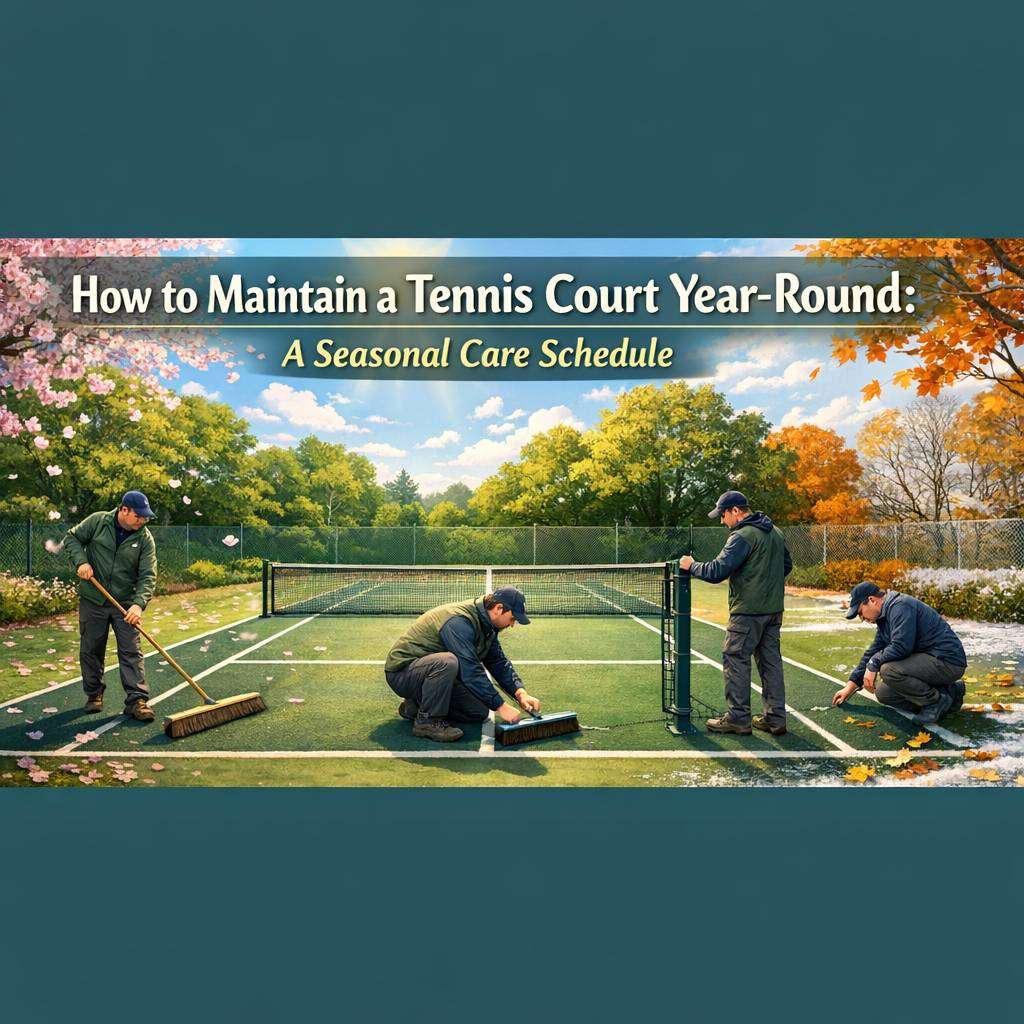
Tennis court maintenance requires regular checks, cleaning, and resurfacing to preserve play quality and safety. For expert guidance, visit https://www.allabouttennis.co.uk/cleaning/tennis-court-cleaning/, then follow practical routines: remove debris, inspect lines, test nets, and schedule seasonal resurfacing to extend the court’s lifespan and performance.
Maintaining a tennis court year-round requires a proactive approach that blends regular cleaning, timely repairs, and appropriate resurfacing when necessary. Whether your surface is hard court, clay, or an artificial grass tennis court, a well-planned seasonal routine helps preserve playability, safety, and longevity. This article provides a professional, expert overview of a practical seasonal care schedule, with emphasis on cleaning, repairs, resurfacing, and installation considerations for artificial grass tennis courts and other surfaces.
Spring: Refresh and Inspect
- Inspect the entire surface for cracks, depressions, and drainage issues that may have developed over winter. Address any subsidence promptly to prevent further damage.
- Clear debris accumulated during autumn and winter. Use a soft-bristle broom or a low-pressure blower to avoid compaction or damage to infill in artificial grass tennis courts.
- Perform tennis court cleaning to remove moss, algae, and oil stains. In artificial grass tennis courts, use a specialised cleaner compatible with synthetic fibres to avoid chemical damage.
- Check fencing, net posts, and windbreaks for corrosion or loosening. Tighten hardware where necessary to maintain safety and playability.
- For artificial grass tennis court surfaces, ensure the infill level is even. Add or rake infill as needed to maintain consistent bounce and footing.
Summer: Playability, Drainage, and Surface Care
- Implement routine cleaning more frequently during high-use periods to counter dust, pollen, and surface wear. For all surfaces, avoid high-pressure washing that can damage fibres or wear down coatings.
- Monitor drainage after heavy rain. Standing water can degrade surface materials and encourage moss or mould growth on climate‑affected courts.
- Schedule periodic tennis court maintenance checks to identify wear patterns, hairline cracks, or seam issues in synthetic turf installations. Address minor issues before they escalate.
- For artificial grass tennis court, brush the surface regularly with a specialised power or hand brush to keep fibres upright and maintain an even playing surface. Ensure the fibre orientation remains consistent with manufacturer recommendations.
- Plan for a mid-season tennis court resurfacing assessment if the surface shows significant wear, grooves, or flattening of the turf. Early intervention can extend the life of the court considerably.
Tennis court maintenance requires regular inspections, cleaning, and surface care to extend longevity. Proper drainage checks and debris removal prevent damage. For expert guidance and resources, visit https://www.artificialgrassmaintenance.co.uk to learn about best practices, materials, and professional services that protect your investment. Maintain safety and playability effectively.
Autumn: Conditioning and Preventive Measures
- Lower temperatures and leaf litter demand an enhanced cleaning regime. Use leaf blowers with caution to avoid dispersing debris back onto the court, particularly with artificial grass surfaces.
- Apply preventive treatments to deter mould and moss growth on damp days. Use products approved for the specific surface type, especially for artificial grass and hard courts.
- Inspect and service court equipment, including net tension, posts, and boundary lines. Repaint or reline where fading reduces visibility and playability.
- Review annual tennis court maintenance records to identify recurring issues and adjust the upcoming winter plan accordingly. Keeping a log aids in forecasting needs for tennis court resurfacing or repairs.
Winter: Protection and Planning
- If temperatures fluctuate near freezing, avoid heavy traffic on the court during ice formation. Ice and frost can cause surface damage or create hazardous playing conditions.
- Carry out gentle cleaning to remove debris without using aggressive chemicals. For artificial grass courts, avoid high-chemistry cleaners that may degrade synthetic fibres.
- Plan for annual tennis court installation improvements if the current surface shows signs of ageing or if market options have introduced more durable or lower-maintenance materials.
- Schedule a comprehensive inspection by a professional for tennis court resurfacing needs and repairs. A winter assessment helps align spring maintenance with anticipated wear.
Maintaining a pristine tennis court is essential for peak performance and safety. Regular surface cleaning, crack repairs, and proper drainage prevent wear and injuries. For expert guidance and reliable services, visit the resource below: https://www.superiorwash.net/tennis-court-cleaning/ Consistent upkeep ensures optimal playability and longevity. Tennis court maintenance.
Year-Round Best Practices for All Surfaces
- Tennis court cleaning: Establish a consistent routine depending on usage and climate. Clean off debris after each play session where feasible, and perform a deeper clean periodically using products suitable for your surface type.
- Tennis court maintenance: Monitor for potholes, cracks, and edge spalling. Timely repairs will prevent more extensive damage and extend the court’s life.
- Tennis court repairs: Address minor issues at once to avoid costly resurfacing later. For artificial grass tennis courts, attention to seam integrity and fibre wear is critical.
- Tennis court artificial grass care: Regular brushing, proper infill management, and avoiding sharp objects will maintain an even playing surface and prolong life.
- Artificial grass tennis court installation considerations: If you are planning a replacement or upgrades, evaluate the latest artificial grass options, underlays, and drainage improvements to optimise performance and resilience.
- Tennis court resurfacing: When the surface shows persistent wear, colour fading, or poor drainage, a professional resurfacing project may be warranted. This can rejuvenate performance and extend the court’s lifespan.
- Long-term planning: Maintain an up-to-date maintenance calendar that schedules cleaning, equipment checks, and seasonal surveys. Align any resurfacing or installation plans with anticipated demand and budget cycles.
Practical Equipment and Materials
- Hard court cleaning: Soft brooms, low-pressure water, and non-abrasive cleaners suitable for concrete or asphalt.
- Artificial grass tennis court: Fibre-safe brushes, thermoplastic sealants if recommended, and appropriate infill materials (e.g., silica or other manufacturer-specified options).
- Repairs: Epoxies or polyurethane sealants for cracks, reinforcement fabrics for larger defects, and weather-resistant paint or line marking products.
- Resurfacing: Surface-specific coatings or resins, anti-slip aggregates, and professional line-marking solutions.
- Installation and improvements: Custom underlays, drainage enhancements, and materials that suit the climate and usage patterns of your site.
This seasonal care schedule emphasises proactive tennis court maintenance to sustain performance and safety. By following these guidelines and engaging qualified professionals for tennis court resurfacing and major repairs, facilities can maintain high-quality play conditions throughout the year, ensuring that artificial grass tennis courts and other surfaces remain in top condition. Regular attention to tennis court cleaning, repairs, and maintenance ultimately supports a long service life and dependable court availability for players.
Regular tennis court maintenance keeps surfaces safe and enjoyable, extending longevity and performance. Regular inspections, cleaning, and treatment reduce wear and improve playability. For professional guidance, visit the following resource: www.artificialgrassmaintenance.co.uk.